
Gas furnace

Back to Trane products

Trane L9X1 95 Single-Stage Ultra-Low NOx Gas Furnace service and support

Trane Furnaces Gas furnace Repair, maintenance, and replacement planning
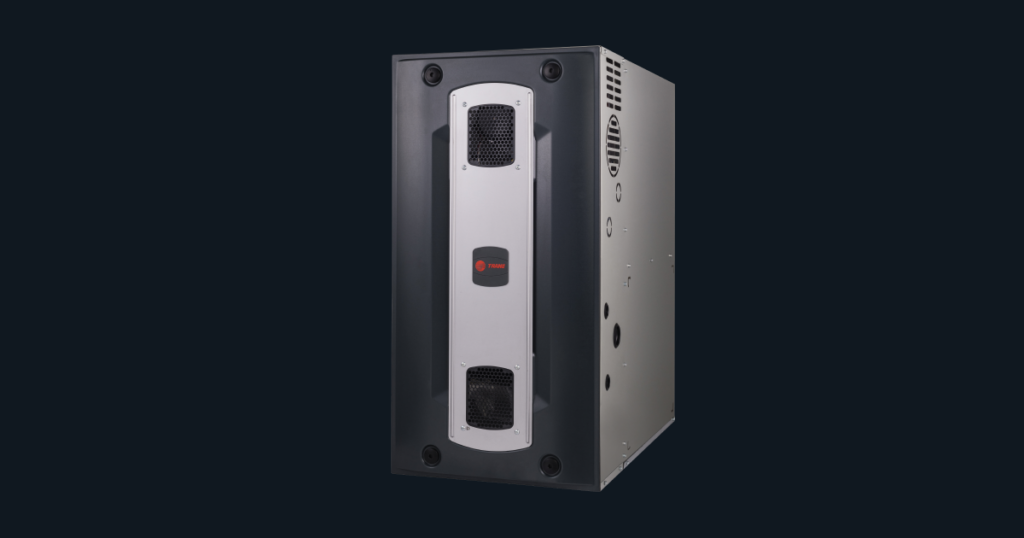
Trane L9X1 95 Single-Stage Ultra-Low NOx Gas Furnace product image

Product service snapshot

Trane L9X1 95 Single-Stage Ultra-Low NOx Gas Furnace service details

Trane L9X1 95 Single-Stage Ultra-Low NOx Gas Furnace requests should identify the no-heat symptom, ignition or lockout behavior, venting condition, thermostat status, and whether the property has compliance or replacement-planning concerns. GreenFlow can help with service routing and practical heating upgrade conversations.

  • Brand: Trane
  • Model or series: L9X1 95 Single-Stage Ultra-Low NOx Gas Furnace
  • Equipment type: Gas furnace
  • Product group: Furnaces

Technical snapshot

Trane L9X1 furnace technical snapshot

Product Specs

  • Efficiency family: 95 single-stage ultra-low NOx gas furnace
  • Heating and airflow: single-stage operation with constant-torque ECM blower motor
  • Listed model family: L9X1A050U3VS, L9X1B070U4VS, and L9X1C100U5VS
  • Published cabinet dimensions: 34.5 in. height, 28 in. depth, and model-dependent width
  • Core components: less than 2% cabinet air leakage, fully insulated cabinet, stainless steel secondary heat exchanger, heavy-gauge cabinet, and compatibility with single- and two-stage air conditioning units
  • Former product name: L9X1 Ultra-Low NOx Gas Furnace
  • Brand: Trane
  • Model or series: L9X1 95 Single-Stage Ultra-Low NOx Gas Furnace
  • Equipment type: Gas furnace
  • Product group: Furnaces
  • System role: Forced-air heating appliance for a ducted HVAC system
  • Application: Residential, light-commercial, or managed-property comfort applications
  • Compatibility check: Verify fuel type, venting, electrical requirements, capacity, controls, and installation clearances.
  • Verified source: trane.com

Useful troubleshooting details

  • Confirm the exact L9X1 model number, serial number, gas type, venting, filter size, and thermostat before scheduling.
  • Share no-heat, ignition, lockout, flame, blower, short-cycling, and error-code details.
  • For replacement planning, identify whether the request involves ultra-low NOx requirements, furnace replacement, or heat-pump conversion planning.

Service planning

How GreenFlow handles L9X1 95 Single-Stage Ultra-Low NOx Gas Furnace requests

1

Identify the equipment

Confirm the model or series name, serial number if available, photos, and whether the unit is roof, exterior, basement, or mechanical-room equipment.

2

Describe the service issue

Share no heat, no cooling, weak airflow, error codes, alarms, leaks, noise, control problems, or comfort complaints.

3

Review access and history

Include access notes, tenant or business-hour constraints, filter status, recent repairs, and maintenance records when available.

4

Plan the next step

GreenFlow can route the request for diagnostics, repair planning, maintenance, replacement scope, or related system upgrades.

Additional Services

L9X1 95 Single-Stage Ultra-Low NOx Gas Furnace service questions

Can GreenFlow help with Trane L9X1 95 Single-Stage Ultra-Low NOx Gas Furnace service requests?

Yes. GreenFlow can help collect the right details for Trane L9X1 95 Single-Stage Ultra-Low NOx Gas Furnace service requests, including the model, symptoms, equipment age, building type, access notes, photos, and timing.

What symptoms should I mention for L9X1 95 Single-Stage Ultra-Low NOx Gas Furnace?

Helpful symptoms include no heat, ignition trouble, lockout or error codes, short cycling, blower concerns, venting or condensate issues, thermostat behavior, unusual noise, and maintenance history.

Is L9X1 95 Single-Stage Ultra-Low NOx Gas Furnace used for residential or commercial properties?

Furnace requests are usually residential or managed-property heating requests. They may also be part of replacement or furnace-to-heat-pump planning conversations.

What helps schedule L9X1 95 Single-Stage Ultra-Low NOx Gas Furnace service faster?

Share the exact model and serial number if available, clear photos of the equipment and surrounding access area, current symptoms, recent maintenance history, and whether the request is repair, maintenance, or replacement planning.